Copyright © 2020-2021 Shenzhen CDTech Electronics LTD. All rights reserved. Site Map Powered by iwonder.cn

display / touch / bonding solutions
display / touch / bonding solutions
A TFT LCD module arrives with a datasheet, a part number and often a supplier declaration that mentions CE. That declaration rarely maps onto the CE marking obligation the finished device carries, because the two documents answer different questions. One describes what the part is. The other records that an appliance conforms.
This guide splits the CE marking LCD module question by who places the finished product on the market, then narrows to the directives that genuinely reach a bare panel: EMC, RoHS, and the component-status route that keeps an unmodified module outside apparatus scope. It is written for the compliance engineer or product manager who has to sign off a specification and defend the reasoning to an importer, a test house or a customer audit.
The operator placing the device on the EU market signs it.
The declaration is one self-declaration covering every directive the finished device falls under, which means the signer needs the module evidence in hand before putting a name to it.
CE marking is not a certificate, and no authority issues one. The manufacturer, or the importer bringing the device in from outside the EU, builds the technical file, arranges the assessment, signs the declaration of conformity and affixes the mark. When the display is one bought-in sub-assembly among many, that signer is still the appliance producer, and a distributor that relabels the device takes on the same duty.
Projects lose time here. A purchasing team receives a datasheet marked “CE compliant” and assumes the paperwork is closed, while the person who must sign is still missing EMC data for the enclosure, the loom and the power supply. Two declarations can coexist: the module maker attests to the part it shipped, the appliance maker to the product that leaves the factory.
EMC is the directive most often assumed to travel with the panel, and the assumption is only half right. Emissions and immunity belong to a complete installation, so the same panel can pass in a shielded housing and fail behind an open bezel with an unshielded flex tail. The EMC Directive 2014/30/EU applies to apparatus placed on the market, which is why a module report describes a reference setup rather than the result for your own build.
Read the report as evidence about the part, not about the product. It records the standards applied, the supply voltage, the cable lengths and the enclosure, and those conditions are the first thing to compare with your own build. A report from a bare bench panel is a design input; one from inside a representative housing gets closer to something the appliance file can cite. Change the driver, extend the flex or add a connector and the evidence stops describing what ships, which is the boundary of any component-level report.
It qualifies when built into a host, not used standalone.
The test is intended function and marketing, because a panel sold in an enclosure with inputs and a user interface reads as apparatus to market surveillance.
Component status follows intended use, not size or price. A panel designed to be built into another product, sold to integrators and unable to work without a host, a power stage and an enclosure is treated as a component or sub-assembly. Commission guidance on the EMC Directive follows the same logic: equipment intended for incorporation is assessed as part of the final apparatus.
The test is practical: could the part, as shipped, be put into service by an end user? A bare panel with a flex tail cannot. A panel bonded to a driver board inside a bezel, with an HDMI input, a power jack and a menu button, can, and at that point the supplier is placing apparatus on the market. Marketing matters as much as the drawing: a page inviting end users to plug the part in undercuts the claim.
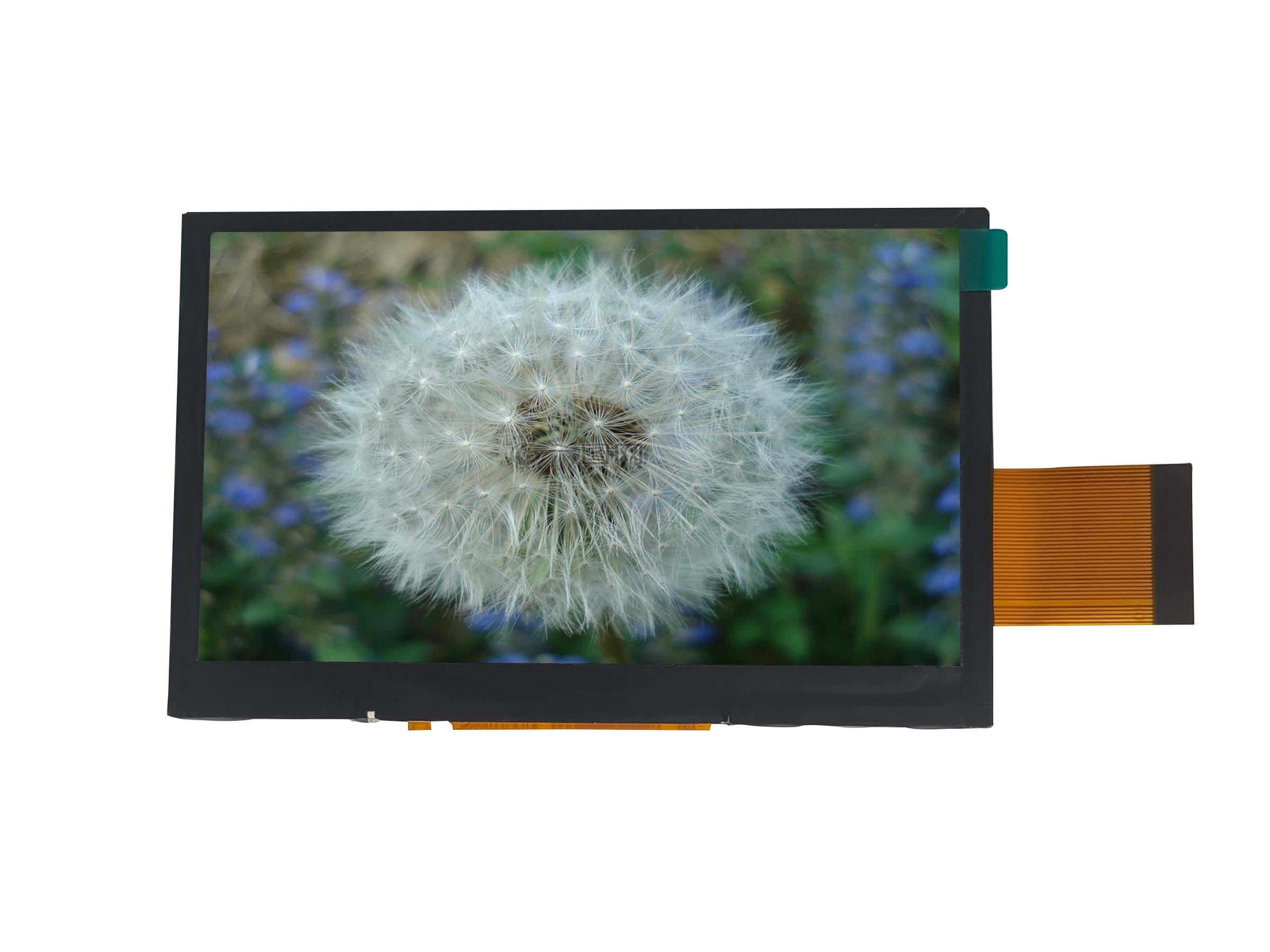
RoHS is the obligation that does not move with the CE mark. Directive 2011/65/EU restricts lead, mercury, cadmium, hexavalent chromium, PBB, PBDE and four phthalates in electrical and electronic equipment placed on the market, and it reaches the module whatever the EMC position happens to be. The appliance producer carries final responsibility, but the module maker is the only party with visibility of the bill of materials.
In practice the maker supplies declarations per homogeneous material, backed by analytical reports, and cites any exemption relied on with its expiry date. A statement that says only “RoHS compliant” without substances, exemptions and a report reference is a claim rather than evidence, and an expired exemption turns a conforming part into a non-conforming one with no change to the drawing.
Whoever places the bare module on the EU market carries it.
Importing counts as placing on the market, so the importer's name, address and document retention duty attach at that first moment, not at the point of resale.
A bare module imported from outside the EU is placed on the market by the importer, and importing is not a neutral act. The importer's name goes on the product or packaging, a copy of the technical documentation is kept, and the importer answers when a market surveillance authority asks. A company that buys panels from a non-EU maker and builds them into machines sold in the EU holds both roles at once.
Two overlays change the answer. For consumer products, the General Product Safety Regulation (EU) 2023/988 adds a responsible economic operator established in the EU, a duty that applies whether or not a directive covers the item. In Great Britain, UKCA marking runs on a parallel track, and a CE declaration does not convert into a UK one.
A module is rarely one electrical object. The touch controller sits on a separate flex or a small board, the backlight driver is a switching converter with its own layout and switching frequency, and the interface board carries a clocked parallel or LVDS link. Each block can be the emission source that decides whether the assembled device passes, so treating the module as a black box hides the part of the design where fixes are cheapest.
Suppliers assess these parts separately because they are sourced separately. A touch controller may come with the controller vendor's own data and layout guideline; a backlight driver with a converter datasheet and a note on loop area. Those documents are design inputs for the appliance work, not module-level conformity evidence, and presenting them as the latter looks thin.
Not every regime that touches a display touches the panel the same way, and the difference stops being interpretation once each party's role is fixed. The table separates the obligations that reach a bare module from those that attach to the product, and names the evidence each expects.
| Directive or regime | Reaches a bare module? | Demand at module level | Evidence normally held |
|---|---|---|---|
| EMC Directive 2014/30/EU | No, while it stays a component | Emissions and immunity in a defined set-up | Test report on a stated configuration |
| Low Voltage Directive 2014/35/EU | Rarely | Scope starts at 50 V AC or 75 V DC | Not applicable on a 3.3 V rail |
| RoHS Directive 2011/65/EU | Yes | Substance limits across the materials | Material declarations and reports |
| Ecodesign for displays (EU) 2019/2021 | Rarely | Attaches to the display as a product | Power and efficiency data |
| UKCA marking | Separate UK regime | Parallel assessment for Great Britain | UK-specific declaration and file |
Two rows carry most of the confusion. The Low Voltage Directive appears in module datasheets although a 3.3 V or 5 V panel sits far below its thresholds, and ecodesign for displays is cited as though it applied to the panel rather than to the display itself.
A module maker cannot sign your DoC, but it can hand over the material that makes the file defensible. The legitimate contents are narrower than a sales pack and wider than a datasheet: the controlled drawing with revision, the bill of materials at material level, RoHS declarations with the analytical reports behind them, a test report naming the standards and configuration tested, and the quality documentation that shows the process is repeatable lot to lot.
What does not belong in the file is a document titled as a CE certificate for the module. Most of the time that phrase describes a test report or a supplier declaration, and neither is a certificate issued under a directive. Reading the title carefully stops a reviewer concluding the file overclaims. Published certifications deserve a check for scope, issuing body and validity dates rather than the logo; CDTech's quality and certification documentation is a starting point, not a substitute.
A supplier declaration is short and carries a lot of weight, and most of the risk sits in the fields a template omits. The checklist covers the ones that shift who carries the risk when an authority or a customer audit starts asking.
Run the list against the document rather than against a product page badge. Where a field is missing, ask for it in writing before the purchase order is raised; a clarification email costs less than a re-test after the enclosure is tooled. Where no such document exists, that should change how much of the assessment the team plans to do in-house.
The evidence pack should be decided before the first shipment. Three shapes cover most projects. A bare panel bought for integration needs a component pack: drawing, RoHS declarations, EMC data as a design input and no apparatus claim. A module in an enclosure sold to end users needs an apparatus pack, and the supplier is likely the party declaring. A spare part sold to service organisations needs traceability back to the original approval.
Deciding which shape applies fixes the scope of everything else, including who pays for testing. It also sets what to ask during sourcing: for a custom build, the custom sourcing brief should state the target market, the intended enclosure and whether the module will be resold separately, because those three facts decide the directive split and the labelling. Record which shape applies, so a later variant does not inherit the wrong pack.
Cost tracks scope; an EU operator carries the duty.
Two questions arrive together in every EU-bound project: what the mark costs and who answers for it. Cost follows the route rather than the product class. A component supplied with an existing test file is largely a documentation exercise, while an appliance-level assessment with accredited EMC testing adds laboratory time to the schedule. No single figure holds across both.
Responsibility is the part buyers underestimate. A responsible economic operator established in the Union must be identifiable for products placed on the market there, and a factory outside the Union cannot discharge that role for itself. A panel maker can supply the technical file, the drawings and the test evidence; the entity that places the goods on the market carries the duty. Agree who that is before the first shipment.
If the file for a first EU shipment needs module documentation that slots into your own declaration, CDTech can walk through the drawings, material declarations and test data held for a specific part and say plainly what is and is not covered. Write to [email protected] or use the contact page to start that exchange.
Does a bare TFT panel need a CE mark?
Usually not on its own. A panel designed to be built into another product, sold to integrators and unable to run without a host is treated as a component or sub-assembly, so the marking obligation attaches to the finished apparatus instead. The exception is a panel marketed as a plug-and-play display with its own inputs and enclosure, where the supplier is placing apparatus on the market. What a bare panel does need is RoHS documentation, because the substance restrictions follow the equipment and the module maker is the only party that can see the full bill of materials.
Who signs the DoC when the display is bought as a component?
The economic operator that places the finished device on the EU market signs it, normally the appliance manufacturer or the EU importer. The module supplier signs a separate declaration covering the part it shipped and the limits of the configuration tested. That document supports the appliance file but does not transfer the duty. A company that imports modules from outside the EU and builds them into machines holds both roles at once, so it should plan one file that covers the module as received and the machine as shipped.
Does CE cover the touch controller separately?
No separate CE marking exists for a touch controller as a part. The controller is assessed as part of whatever product it is built into, and the controller vendor's test data plus layout guidance are design inputs for that assessment. A capacitive controller and its sensor can be a significant emission and immunity factor, particularly with a long flex and an unshielded cover lens, so the data is worth requesting early. If the controller ships on its own board sold to integrators, the same component-versus-apparatus question applies to it.
What changes if the display is sold as a spare part?
A spare that replaces a display in an already marked product does not need a new marking of its own when it is identical to the approved part, but the traceability has to hold: part number, revision and the approval it belongs to should be recorded against the original file. If the spare differs in a way that affects EMC, safety or substance compliance, the original assessment no longer covers it. Service organisations buying displays for repair should ask which approved configuration the part matches before fitting it.
By continuing to use the site you agree to our privacy policy Terms and Conditions.