Copyright © 2020-2021 Shenzhen CDTech Electronics LTD. All rights reserved. Site Map Powered by iwonder.cn

display / touch / bonding solutions
display / touch / bonding solutions
Seven inches is the size most industrial programmes settle on, and the one where the specification is written most loosely. Four resolutions are in volume supply, and the phrase 7 inch tft lcd module covers all of them, from a 33 MHz 800x480 panel that a microcontroller can drive directly to a 1920x1200 part that needs two LVDS channels or four DSI lanes and a frame buffer measured in megabytes.
That spread is invisible on a quotation. It becomes visible when the second source arrives, or when the host board is laid out and the chosen panel needs a port the processor does not have.
Resolution sets the interface before the connector does.
Four common resolutions line up with four host ports: parallel RGB at 800x480, single-channel LVDS at 1024x600 and 1280x800, dual-channel LVDS or four-lane DSI at 1920x1200.
Resolution is a bandwidth statement, and the connector follows. An 800x480 panel can leave the host as a 24-bit parallel bus at about 33 MHz, which a mid-range microcontroller drives without a serialiser. At 1024x600 the clock crosses roughly 51 MHz and LVDS becomes the default, because a parallel bus at that rate is a routing problem on a small board. 1280x800 still fits a single channel but wants a stable 71 MHz clock; 1920x1200 passes the 85 MHz ceiling and takes the port with it.
| Resolution | Clock at 60 Hz | Interface normally fitted | Host must provide |
|---|---|---|---|
| 800x480 | 33 MHz | Parallel RGB, sometimes LVDS | 28-signal RGB port or serialiser |
| 1024x600 | 51 MHz | Single-channel LVDS, 3 to 4 data pairs | One channel and 1.2 MB buffer |
| 1280x800 | 71 MHz | Single-channel LVDS, 4 data pairs, clock | 85 MHz channel and 2 MB buffer |
| 1920x1200 | 154 MHz | Dual-channel LVDS or 4-lane DSI | Two channels or a DSI port |
The port is chosen months before the panel and is harder to change; CDTech's industrial LCD display range spans the same spread.
The host is tuned to one panel's timing, not to the sheet.
The differences sit in blanking, sync polarity, power sequencing and LVDS mapping, which a datasheet summarises as compatible and a host timing generator treats as exact.
A host that ran panel A holds panel A's blanking, sync polarity and pixel clock in a register table nobody revisits when a part number with an identical drawing arrives. The second panel then locks on a bench and tears in an enclosure, or shows a cast that reads as a gamma fault.
LVDS mapping is the first divergence: the same connector carries VESA or JEIDA bit order, and the wrong one misreads colour with no electrical difference. Sync mode is the second, since some panels accept only data enable and others expect separate sync. Dual-channel parts add channel swap, which splits the picture down the middle. Automotive work adds a layer, because the AEC qualification documents cover the driver IC rather than the module assembly.
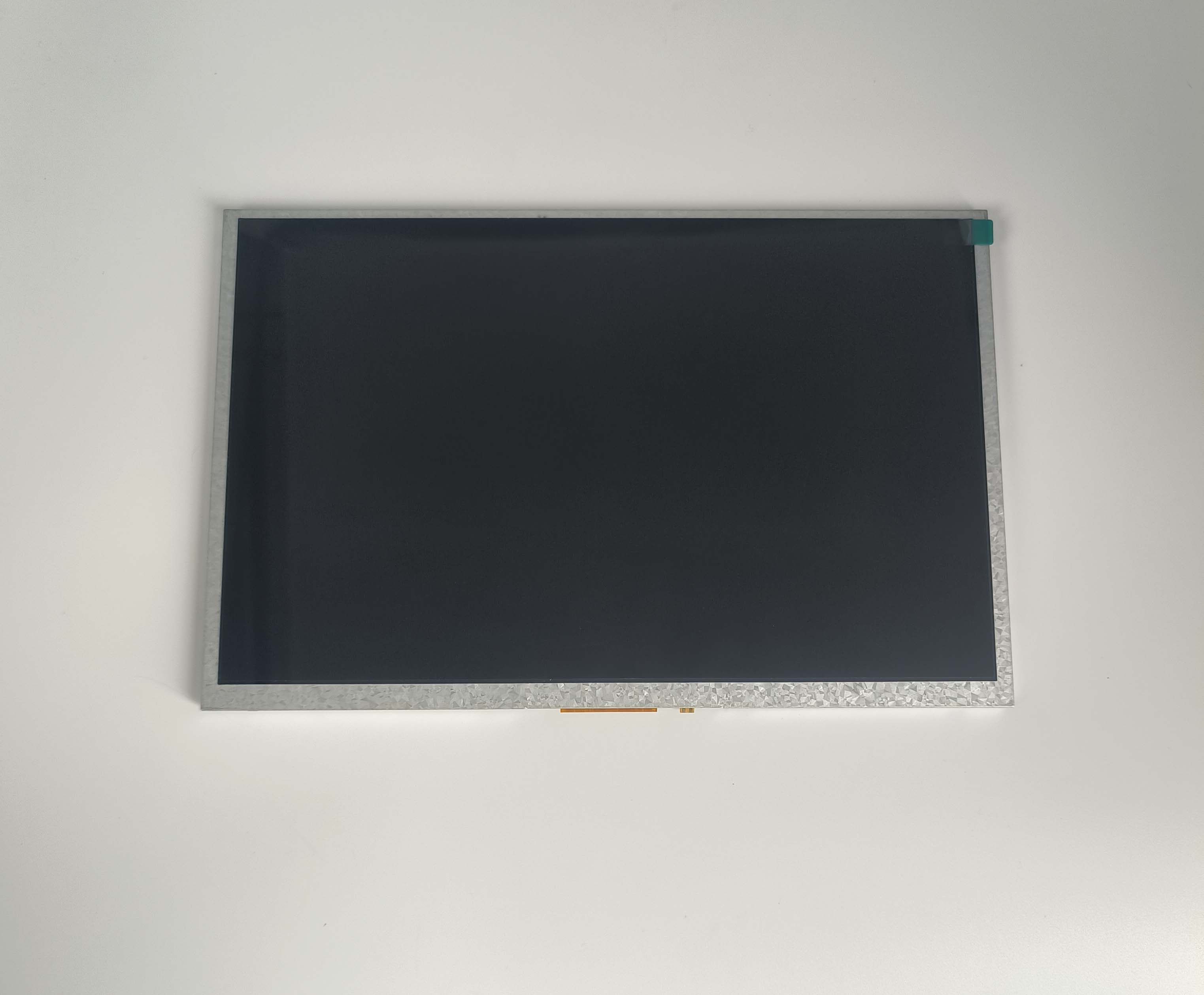
It forces two channels and a multi-megabyte buffer.
At 60 Hz a 1920x1200 panel needs 154 MHz pixel clock, so the host drives two LVDS channels or four DSI lanes and holds 4.4 MB per 16-bit frame.
At 7 inches, 1920x1200 gives about 323 pixels per inch, more than a seated viewer resolves and more than most HMI toolkits scale for. The port is the real cost.
A single LVDS channel stops at 85 MHz, so 154 MHz means two channels with two clock pairs, or a four-lane DSI or eDP link. MIPI DSI suits a tablet-derived system on chip and rarely a small industrial board. The connector grows either way: dual-channel 24-bit LVDS needs eight data pairs and two clocks, against four and one at 1280x800. Memory follows: a 16-bit frame is 4.4 MB, a 24-bit frame 6.6 MB, double buffering doubles that, and 60 Hz moves about 276 MB/s at 16 bits.
Availability is thinner too: fewer industrial 7 inch panels are built at this resolution, so the second-source pool is smaller.
One channel: four data pairs plus a clock pair.
At 60 Hz a 1280x800 panel runs about 71 MHz pixel clock, inside the 85 MHz single-link ceiling, so one channel carries it at about 500 Mbps per data pair.
1280x800 at 7 inches lands near 216 pixels per inch, above the point where pixels are visible at arm's length; it is chosen when 1024x600 looks coarse.
In 24-bit colour one channel uses four data pairs and one clock pair, five pairs with power and ground in a 40-pin connector. An 18-bit variant drops to three data pairs, which is why two panels described the same way arrive on different connectors. The trap is that 1280x800 does not guarantee a single link. Active pixels at 60 Hz come to 61 Mpixel/s, and the clock is that figure plus blanking, so a part with generous blanking can specify 83 MHz and sit near the ceiling. Ask for the pixel clock range, not the typical value. Dual link appears above 85 MHz, which here means a refresh near 72 Hz or a 30-bit colour path.
800x480 wins when the host has no LVDS transmitter.
The saving is rarely the panel: a parallel RGB port, a 768 KB buffer and two-layer routing beat an LVDS transmitter and a larger buffer.
Panel price is the smallest line in the comparison. An 800x480 module runs from a host that already exposes a parallel RGB port, removing a serialiser, a second rail, five differential pairs of routing and an EMC retest. On a four-layer board with a 40-pin flex, that outweighs the price difference.
Memory says the same. A single 800x480 frame at 16 bits is 768 KB; 1024x600 needs 1.17 MB, and double buffering pushes both past internal SRAM on a mid-range microcontroller. Against that, 1024x600 offers about 60 percent more pixels and a 17:10 canvas that suits modern HMI layouts.
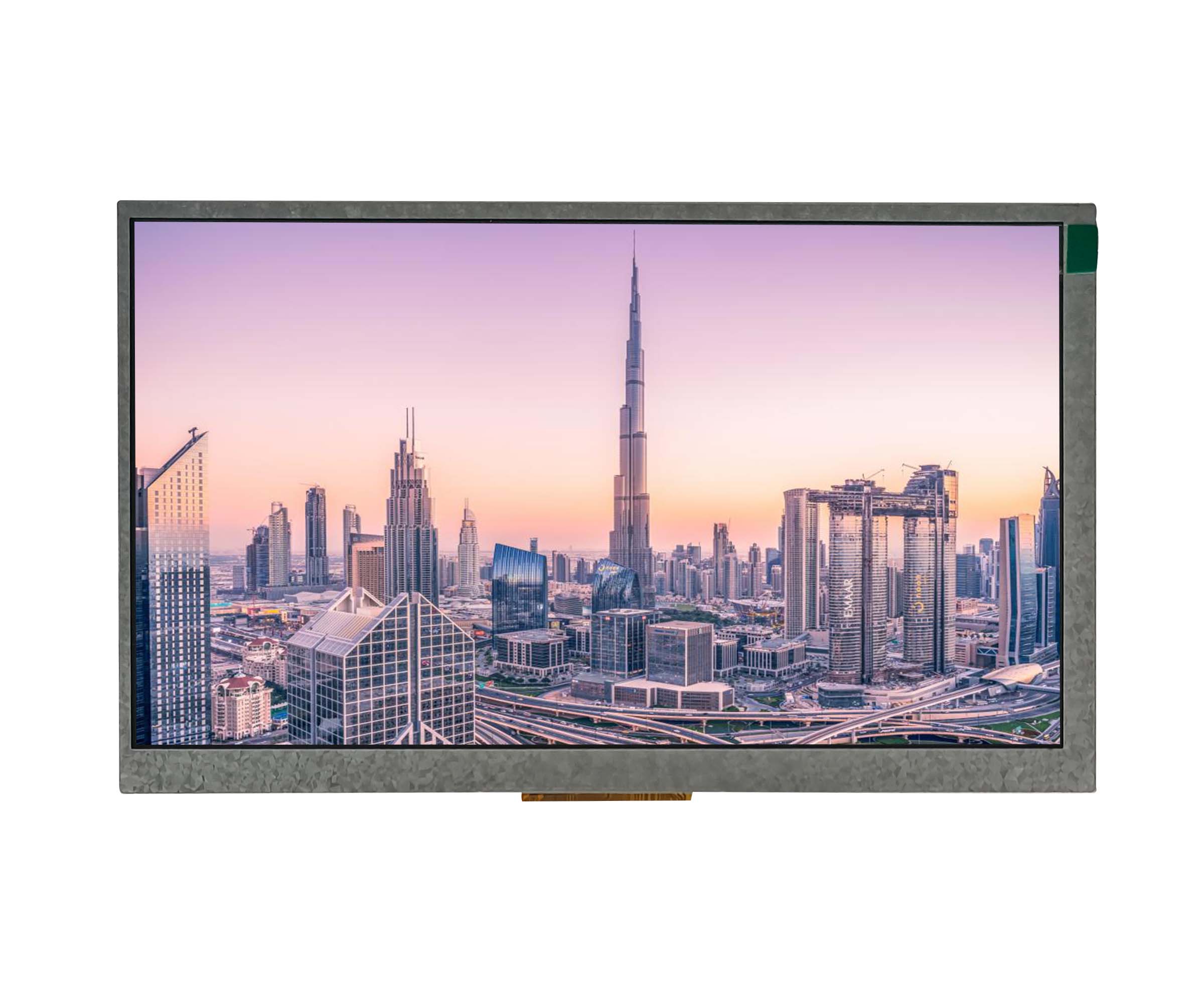
Lifecycle cuts the other way, since 800x480 is designed into fewer new programmes each year; high-brightness versions remain, including this 7.0 inch 800x480 high-brightness TFT display.
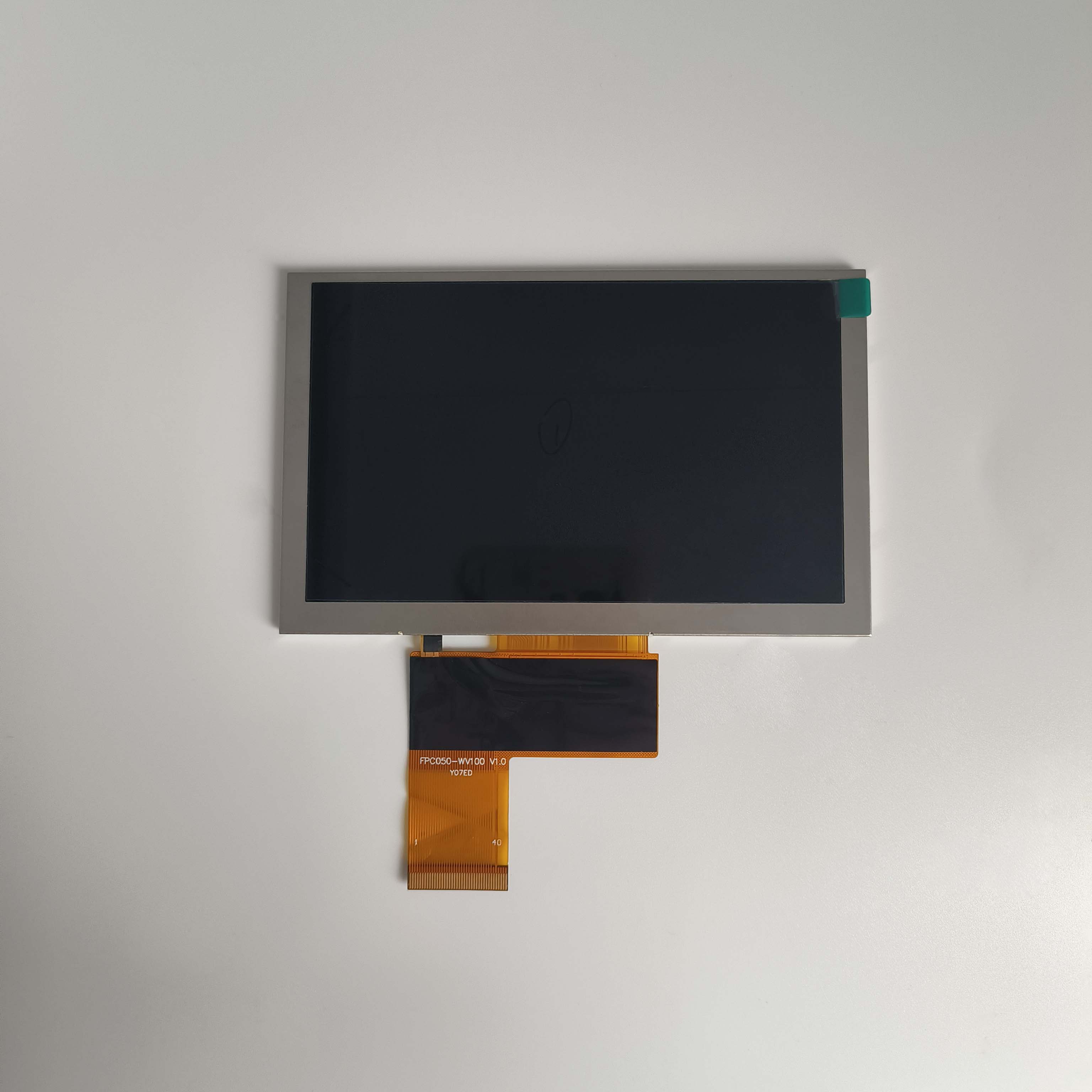
Datasheet comparison is necessary and insufficient. Two panels can agree on resolution, interface and typical pixel clock while disagreeing on what decides whether the image locks at temperature. Capture both parts at the connector, with the enclosure at the top of its range, and answer eight lines.
Answer from a measurement or a written statement, never from a catalogue description, and keep the capture with the approval. A change-control procedure inside the supplier's ISO management system should flag when either panel changes.
Sixty hertz is not difficult at 7 inches until the resolution climbs, and the ceiling is arithmetic. Each LVDS data pair carries seven bits per pixel clock, so one pair at 85 MHz tops out near 595 Mbps, and 85 MHz is the practical single-link limit. The timing conventions behind those clocks are published by VESA, which is where panel blanking numbers originate.
| Resolution | Clock at 60 Hz | Data per pair at 7:1 | Headroom to 85 MHz |
|---|---|---|---|
| 800x480 | 33 MHz | 233 Mbps | 61 percent |
| 1024x600 | 51 MHz | 358 Mbps | 40 percent |
| 1280x800 | 71 MHz | 497 Mbps | 17 percent |
| 1920x1200 | 154 MHz | 539 Mbps per channel | None on one channel |
Read the rows as margin. 800x480 leaves more than half the ceiling unused, which is why it tolerates long flex tails and slow edges; 1024x600 keeps 40 percent; 1280x800 has 17, enough for 60 Hz and not enough to absorb a refresh increase. At 154 MHz one channel is already exceeded; the 539 Mbps figure assumes two channels at 77 MHz.
About three times the backlight power, nearly all as heat.
Luminance tracks LED current almost linearly, so 350 to 1000 nits means a threefold backlight increase in a package barely 7 inches across, with efficiency falling as current rises.
Backlight power scales with luminance, so a 350 to 500 nit module raised to 1000 nits asks close to three times the power through the same converter and thermal path.
Heat is the surprise. An extra 2 W across a panel about 90 by 60 mm warms the glass, the polariser and touch sensor, and LED efficiency falls as junction temperature rises, so the drive needed to hold 1000 nits climbs at the top of the range. Thermal methods published by JEDEC are usually cited. Two points belong in the budget: IPS transmits less light than TN, and an outdoor enclosure must also meet an ingress rating under IEC 60529, which restricts the venting that would otherwise solve the heat.
When the host has one port and no room for a bridge.
If the board already exposes parallel RGB only, or four DSI lanes and no LVDS, the adapter, re-spin or second board costs more than moving a resolution step.
The sequence usually runs backwards: resolution first, then the discovery that the processor needs a bridge.
Start with the ports the host exposes. A microcontroller with only a parallel RGB controller takes 800x480 directly and needs a serialiser for LVDS. A system on chip with one 85 MHz LVDS channel covers 1024x600 and 1280x800 and stops. A processor with eDP output only needs an active converter. An industrial PC with HDMI needs a receiver board. Cable length belongs in the same review: 24-bit RGB at 33 MHz survives a 300 mm flex, and at 51 MHz it does not.
Touch adds an I2C or USB link with its own driver. CDTech's guide to interfaces and controllers sets out how those links pair with a panel. When the port is fixed and the resolution is negotiable, the interface is the specification.
Next step. If your team is comparing 7 inch options and the interface question is still open, CDTech can supply the timing, interface and brightness data for the candidate parts, so the comparison runs on numbers rather than catalogue labels. No obligation attaches to the request.
Is 1024x600 or 1280x800 better at 7 inch?
Neither is better in the abstract; they sit at different points on the same trade-off. 1024x600 runs near 51 MHz, fits a smaller frame buffer and is easier to route, which makes it the lower-risk choice for an instrument panel viewed from half a metre. 1280x800 adds density where the layout needs it and still fits one LVDS channel at 60 Hz, at the cost of a 71 MHz clock and twice the buffer. Decide from viewing distance, the amount of text and graphics on screen, and whether the host can generate the higher clock comfortably.
Which interface does a 7 inch 1280x800 need?
Single-channel LVDS is the normal answer at 60 Hz, with four data pairs and one clock pair for 24-bit colour, or three data pairs for an 18-bit part. The pixel clock lands near 71 MHz, inside the 85 MHz single-link ceiling. A few modules are MIPI DSI only, usually those derived from tablet panels, so the interface should be confirmed on the drawing rather than inferred from the resolution. Dual link enters only above 85 MHz, which at this size means a higher refresh rate or a wider colour path.
Can a 7 inch panel run from a single LVDS pair?
No, not for colour. One pair carries seven bits per clock cycle, so a single pair cannot move a pixel of RGB data; three data pairs are the minimum for 18-bit colour and four for 24-bit, each group accompanied by its own clock pair. The confusion comes from loose wording, since people say lane when they mean channel, and a channel is the group of pairs. A single clock pair is normal; a single data pair is not enough for any 7 inch panel in volume production.
How much does brightness cost at 7 inch?
Approximately three times the backlight power for a move from 350 to 1000 nits, and that power becomes heat inside a small housing. The boost converter has to supply the extra current, LED efficiency drops as junction temperature rises, and the enclosure has to reject the heat without letting dust or water in. The visible benefit is also not linear, because readability in sunlight depends as much on surface treatment and contrast as on raw nits. Budget connector, thermal path and supply headroom together, not the backlight alone.
By continuing to use the site you agree to our privacy policy Terms and Conditions.